
PORTSMOUTH, N.H.—New survey data highlights how smart TVs are becoming the most influential gatekeepers in entertainment, playing an increasingly important role in how viewers discover and watch content.
Data from Hub Entertainment Research’s annual “Evolution of the TV Set” indicates that asking "What good TV shows are you watching?" may be less relevant than asking, "What TV set do you own?" in terms of viewing habits and the ability of smart TV operating systems to influence those choices.
Fox's recent $22 billion acquisition of Roku is the clearest signal yet that control of the TV operating system is becoming one of the industry's most valuable strategic assets, the research suggests.
The “Evolution of the TV Set” study, which reveals the growing influence of the TV set in shaping how viewers discover and engage with content, finds that the operating systems powering today’s smart TVs have become the primary doorway for both programming and advertising.
"The conversation around finding great TV to watch is poised to become like the `Mac vs. PC' or `Android vs. iPhone' battles from prior years — as viewers learn that some TV operating systems do better jobs than others at helping them find good stuff to watch," said Jason Platt Zolov, senior consultant at Hub. "The merger of Fox and Roku will be a watershed proof point that some streamers will have more influence than others, depending on what TV set you own."
Key findings from the report include:
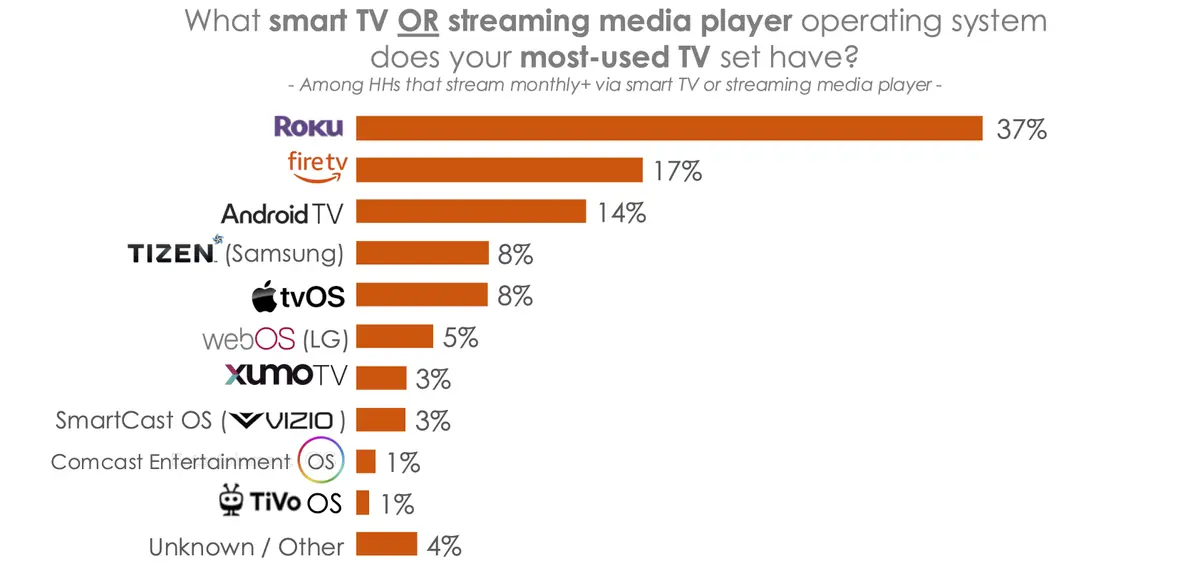
- Smart TVs dominate viewing, and streaming households are embracing Roku and Fire TV more than Android, Tizen (Samsung) or webOS (LG) systems that power those sets.
- Most homes have three TVs, and two of those are now smart TVs, making them more dominant than ever.
- For the TV set they use most, streaming TV viewers are no longer flipping channels: they are living in app-centric environments that are increasingly powered by Roku (37%) and Fire TV (17%), well ahead of Android, Tizen or Apple TV users.
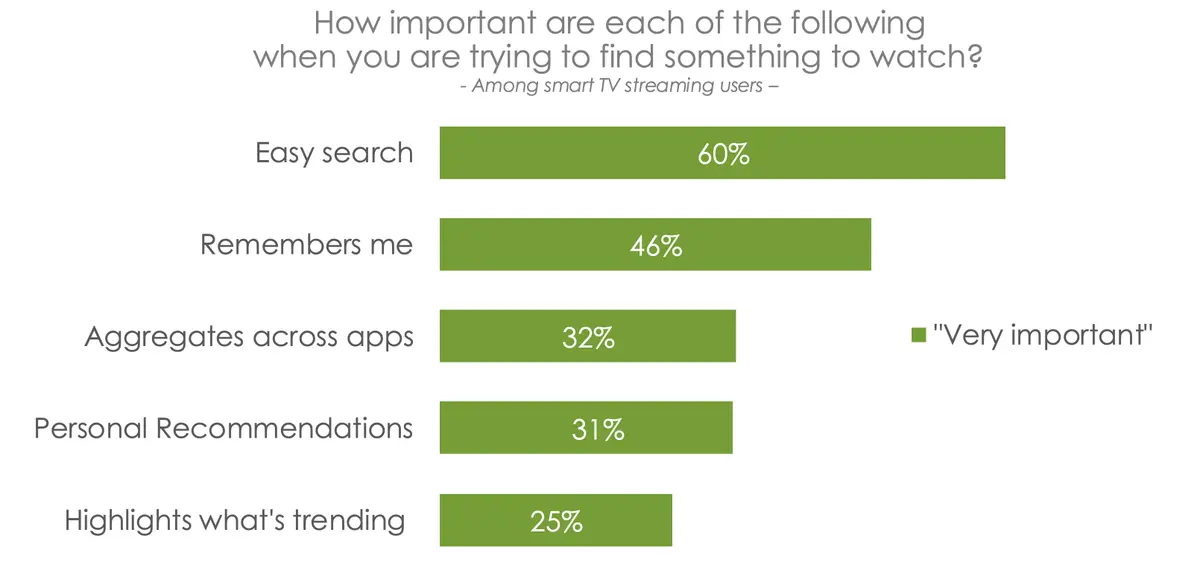
The researchers noted that within different TV operating systems, the viewer's goal is clear: "how can I quickly find a specific program I want to watch?"
When asked to rank what matters most, viewers rank "Easy search" as the most valued discovery feature (60% call it “very important”), well ahead of "personal recommendations" (31%) or seeing "trending content" (25%).
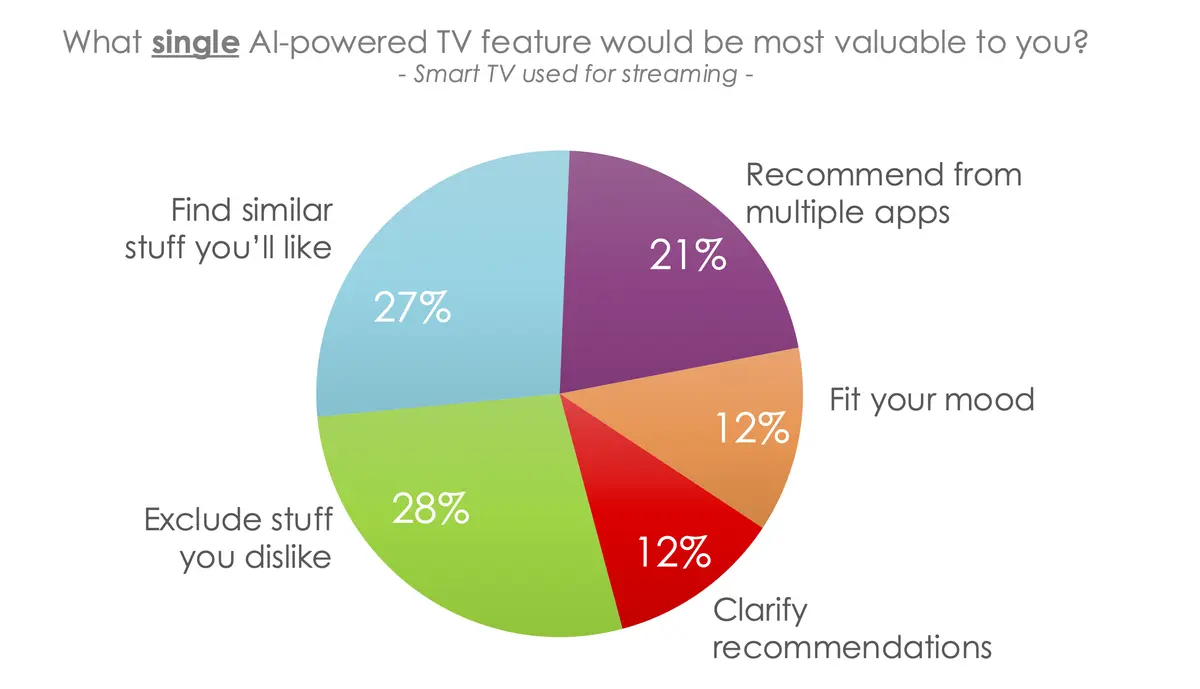
AI-powered TV search features are poised to help viewers solve this search problem. When asked to choose the most valuable AI-powered TV viewing features, more than half of viewers want AI features that either help them find similar things they like (27%) or more effectively exclude stuff they don't like (28%).
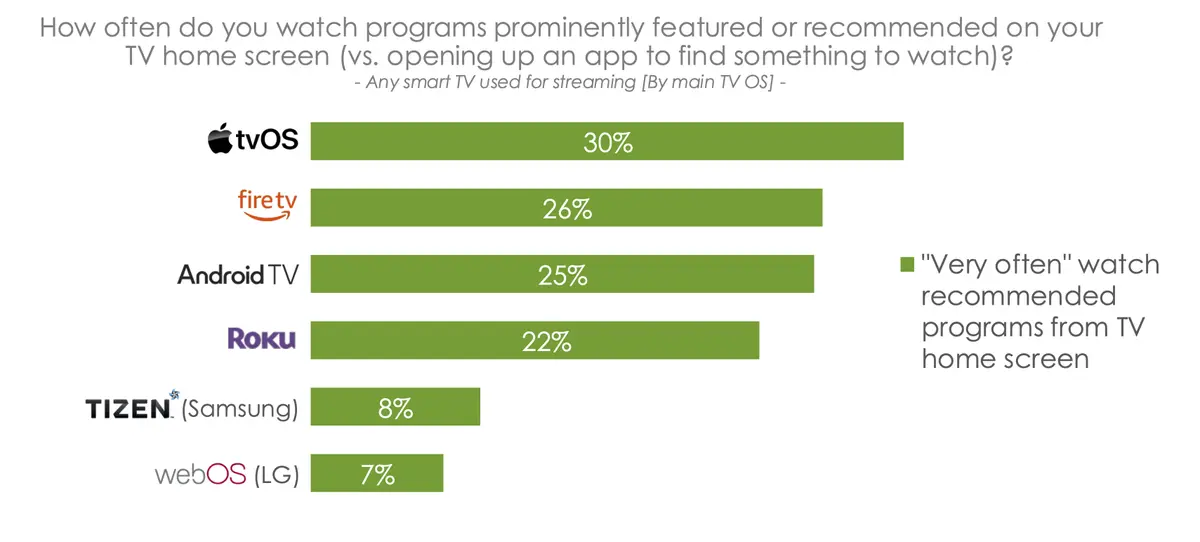
While quick search is most important, home screen real estate and recommendations still significantly impact what people watch.
Some TV operating systems sway users more than others: suggested titles on the TV home screen within Apple TV, Fire TV, Android and Roku environments are all more likely to be watched than those titles being suggested by Samsung (Tizen) and LG (webOS), the survey found.
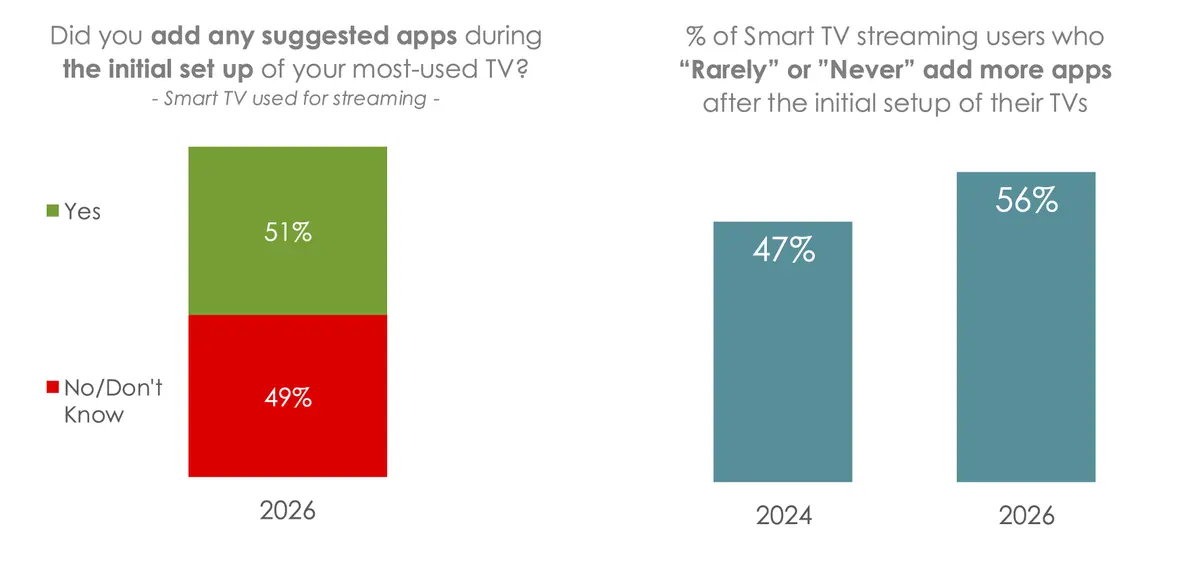
As viewers continue to invest in smart TVs, the vital importance of influencing consumers to install apps when they first turn on their new TV cannot be overstated, the researchers stressed.
Half (51%) say they install suggested apps during setup — but more (56%) this year than in 2024 (47%) say they rarely add apps after that first day home with the TV — a reminder that more needs to be done to capture new TV owners with apps they will love.
These findings are from Hub’s 2026 “Evolution of the TV Set” report, based on a survey conducted among 2,500 US consumers ages 16-74. Interviews were conducted in May 2026. A free excerpt of the findings is available on Hub’s website.

