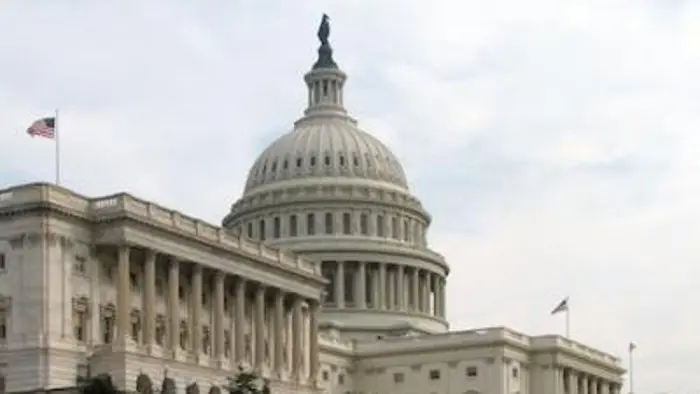
As Democrats prepare to take control of both houses of Congress in January, there’s a debate about whether funding will return for public broadcasting.
In 2025, the Republican-controlled Congress ended funding for the Corporation for Public Broadcasting, which shuttered its doors earlier this year. At the time, CPB Chair Ruby Calvert described what happened to public media over the previous 12 months as “devastating,” but expressed hope for the future.
“In this moment, I am convinced that public media will survive, and that a new Congress will address public media’s role in our country because it is critical to our children's education, our history, culture and democracy to do so.”
Historically Democrats have been far more supportive of public broadcasting than Republicans, who have accused public broadcasters of biased news coverage and a “woke” approach to content.
With Democrats soon to be in charge, PBS CEO Paula Kerger has expressed hope that public media has “paths forward” for some form of funding to return.
At a conference in Los Angeles last week, Kerger said she was hopeful even before the mid terms about a revival of funding and that, after consulting with members of Congress, she thinks any money will first go towards infrastructure for local stations.
“Technology investments have always been expensive, and the government has usually stepped in to help, so I think that’s fair,” she told Current.
Another prominent media figure, though, thinks public broadcasters should wean themselves off of the federal teat (as it were).
In his Second Rough Draft column on Substack, Dick Tofel, former president of ProPublica and now principal of Gallatin Advisory LLC, says reviving money from federal coffers is the wrong move for public broadcasting.
“If renewed funding is possible… I think it would be unwise, for a number of reasons,” Tofel wrote. “The most important of these are the need to insulate from rather than embroil public broadcasters in partisan politics, and the pressing need to reinvent the system rather than to restore it.”
(Tofel reserved his opinion to public broadcasting in the U.S. and not the Voice of America, for which he supports federal funding.)
Tofel urged public broadcasting to “reinvent itself,” calling the term “public broadcasters” “misleading.”
"The most successful 'public' television programs now have much, much larger audiences on private streaming services, especially YouTube, than over linear TV, while the digital audiences for many 'public radio' stations have begun to outweigh those reached through terrestrial radio,” he wrote.
Tofel also urged more use of AI to reduce redundancies and changing its donor focus.
"Beyond adapting to new audiences and inculcating stronger management, stations and networks need, like almost all nonprofit news organizations, to accelerate their adaptation to AI, innovating where possible and accepting efficiencies that don’t compromise quality when available. They also need to refocus their fundraising operations increasingly away from institutional foundations and easy acceptance of program support toward greater outreach to major individual donors and a more pronounced preference for general support.”
“Protect My Public Media” has issued a call to supporters to contact their representatives by Dec. 11 to restore funding for local public stations.

