
“All-IP” is often framed as a clean modernization: fewer cables, more flexibility, and infrastructure aligned with mainstream IT practice. Inside real broadcast facilities, the experience has been more complicated. As media moved onto shared network fabrics, complexity redistributed itself into configuration, timing, segmentation, discovery, and the places where engineering and IT overlap.
Modern facilities blend IP-native and legacy equipment, and their behavior depends as much on commissioning decisions and vendor maturity as on the standards themselves. The result is an environment that looks simpler from a distance but demands a different kind of day-to-day understanding.
When Wiring Disappeared, Complexity Found New Places to Live
In SDI facilities, physical layout expressed most of the design. Signal flow could often be understood by following a cable between devices. Routing was predictable, and faults left visible clues in the rack.
IP systems compress those visible paths into a handful of fibers capable of carrying dozens of HD streams plus associated audio and metadata. The environment looks simpler from a cabling perspective, but the design logic did not vanish — it moved into configuration.
Address plans, multicast ranges, naming rules, VLAN boundaries, timing hierarchies, and orchestrator behavior now determine how a facility behaves. Small inconsistencies in any of these areas can produce wide-ranging effects that are difficult to interpret without a shared view of the fabric.
Responsibility for that fabric now sometimes resides with IT. Security policies often restrict direct switch access, leaving broadcast engineers working at the edges of systems they once controlled end-to-end. Diagnosing issues now depends on both groups and on how well system behavior is understood across teams.
Hybrid architectures sit on top of this reality. Many endpoint devices still process video and audio internally as SDI or HDMI. Cameras, monitors, playback servers, and audio processors often add IP interfaces only at the perimeter. As a result, most modern facilities consist of an IP core surrounded by SDI-to-IP gateways.
Those gateways are long-lived elements — frequently FPGA-based and later repurposed as converters, multiviewers, or audio tools as the environment matures. Hybrid operation reflects endpoint maturity, available budgets, and legacy workflows, not a lack of commitment to IP.
How Modern IP Systems Actually Behave — and Why It Often Surprises
Once configuration becomes the design, system behavior depends heavily on vendor interpretation. Two facilities built on the same standards can still act very differently.
Traffic models provide a clear illustration. Some fabrics rely on IGMP joins initiated by endpoints. In these environments, an endpoint requests a multicast stream and the switch forwards it, often applying bandwidth expectations based on address ranges — for example, one block for 1.5 Gb/s flows, another for 3 Gb/s, and a third for 12 Gb/s UHD.
Other platforms lean on controllers that explicitly authorize flows before the fabric forwards anything, placing the logic in software rather than in address plans. Both approaches are valid, but they require different troubleshooting instincts.
Device maturity introduces further variation. Common patterns include HD-only ST 2110 support with UHD still on the road map, a lack of redundancy, or inconsistent HDR support across levels. Discovery and NMOS behavior can deviate from orchestration expectations, creating situations where advertised capabilities exist but cannot be used as intended.
Many of the thorniest issues in IP environments arise in places that attract less attention in early planning.
Earlier IP deployments often worked around such limitations by having external devices subscribe to the desired multicast and translate it to a single address that a problematic endpoint device could statically subscribe to — a pattern that can still surface when systems rely on older discovery implementations. Many of these gaps first appear during commissioning rather than design.
Timing follows a similar pattern of divergence. Traditional SDI systems relied on black burst — a single, stable reference that kept everything aligned in a straightforward way. PTP, by contrast, distributes timing over multicast and depends on the placement of boundary clocks, redundancy models, and a GPS source.
A facility may appear synchronized even as timing asymmetries accumulate. When they finally surface, the loss of alignment can be sudden and broad. Understanding what happened depends on visibility into how the switches handle timing and on coordination between engineering and IT teams responsible for the underlying network.
Where Hidden Complexity Emerges: Audio, Metadata, and Security Boundaries
Many of the thorniest issues in IP environments arise in places that attract less attention in early planning. Audio and metadata are prime examples.
Under SDI, video, audio, and ancillary data traveled together. In ST 2110 environments, they are carried as separate essences. A single video stream is paired with one or multiple audio multicasts, each carrying multiple audio channels within the stream, while a workflow needs only a subset.
Isolating those channels typically involves mixers, routers, or audio shufflers. Some manufacturers handle this automatically, which reduces operator burden but can obscure the paths signals actually take. Metadata introduces comparable decisions: Captions, multiple languages, SAP, and descriptive audio often require timing adjustments or reinsertion points to keep everything aligned. Early design choices determine how manageable these relationships become later.
Security and segmentation introduce their own hidden dependencies. Production VLANs must support performance while limiting exposure. Some segments cannot reach the internet; others must stay isolated from corporate networks. Contribution devices — bonded cellular receivers, remote encoders, cloud gateways — often require dual network paths to keep external risk from crossing into internal workflows.
WAN circuits add another dimension. Multicast contribution may share bandwidth with monitoring or file‑transfer workflows, and bottlenecks often appear only under actual load rather than during design.
As equipment is brought online, these layers surface most clearly. Commissioning becomes the point where theoretical design meets real system behavior. Discovery issues, timing mismatches, unsupported combinations, and vendor‑specific patterns emerge only when systems are exercised in practice.
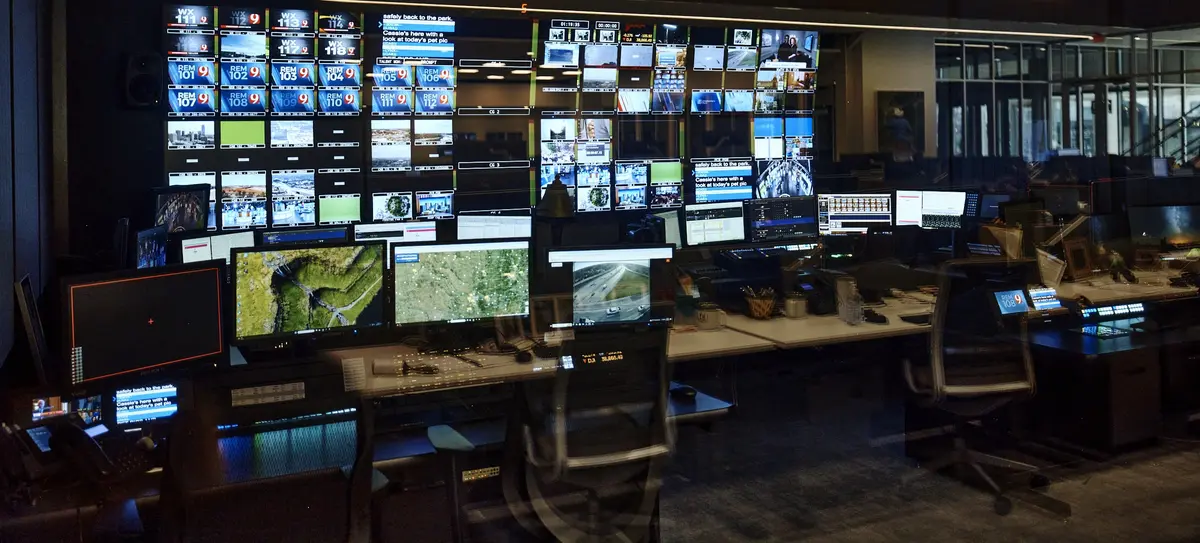
Engineers present at this stage gain insight into why certain exceptions exist; those who join later inherit decisions without that context. Once a facility is live, operational caution limits the ability to revisit early changes. A small adjustment made under deadline can shape behavior for years if not examined before launch.
The Human Impact at the Center of the Transition
The shift toward IP reshapes engineering roles in uneven ways. SDI’s deterministic behavior created expectations that do not always match IP’s conditional, policy-driven workflows. Some engineers adjust slowly as long-familiar tools behave differently in an IP environment.
Others anticipate continuity and then face situations that require new diagnostic habits. Engineers newer to the industry often adapt quickly, while experienced teams bring operational judgment that remains essential even as the foundations shift.
Experience continues to influence outcomes, though its expression changes. As environments grow more interdependent, responsibilities expand toward interpreting workflow needs, coordinating across vendors, mentoring newer staff, and explaining why specific design decisions matter. Familiarity with on-air requirements provides context that purely theoretical knowledge cannot replace.
Organizational structure also shapes how teams adapt. Some facilities place most control within IT, reducing the level of direct access broadcast engineers once had. Others rely on engineering leads who serve as system stewards and primary points of contact for IT and security groups. Clearly defined responsibilities help teams navigate the shift with fewer surprises.
The transition to IP continues to redraw familiar boundaries inside facilities, and engineering teams absorb much of that change. Tools, standards, and roles will keep evolving, but the work of making systems understandable and supportable still falls to the people who stand between design and day-to-day operation. That is where the real continuity lives.

